This post may contain affiliate links, meaning that if you click and make a purchase, I may earn a commission at no additional cost to you. Read the full disclosure here.
I didn’t realize how American my childhood was until I started imagining what my son’s will look like in France.
There are things he’ll never say. Experiences he’ll only recognize from a movie. The kind of small, ordinary moments you don’t question because that’s all you knew.
He’s going to grow up with a different set of cultural defaults: different routines, different rituals, different milestones. Not better or worse. Just different.
It starts with the words you say every morning at school.
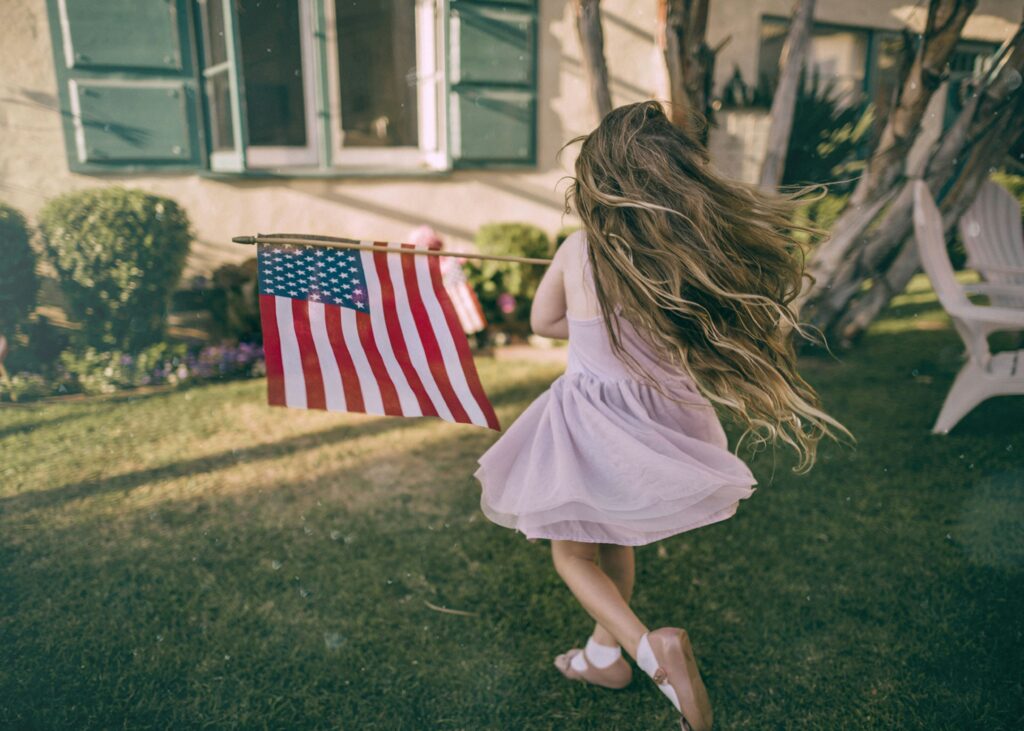
The Pledge of Allegiance
“I pledge allegiance to the flag of the United States of America…”
After honoring the flag every day at school, as both a student and later as a teacher, I’ll admit I can still say the whole thing by heart. A regularly scheduled recitation of the pledge is mandated or strongly encouraged in most states, and you can hear it ringing down the hallways of nearly every public school.
But these are words that my son will never be expected to utter. There’s no equivalent to this practice in France either. Of course, he will learn to sing La Marseillaise in school. Since 2005, the French national anthem has been part of the curriculum in nursery and elementary schools. That being said, it’s not a daily ritual. These aren’t words that will shape his morning routine the way the pledge did mine.
Yellow School Bus
The yellow school bus is iconic, so much so that people around the world recognize it from American films. Many school districts provide transportation for students attending their assigned public schools. From elementary school through high school, I was either picked up right at my house or just down the street with another kid. Missing the bus meant a major inconvenience for my parents!
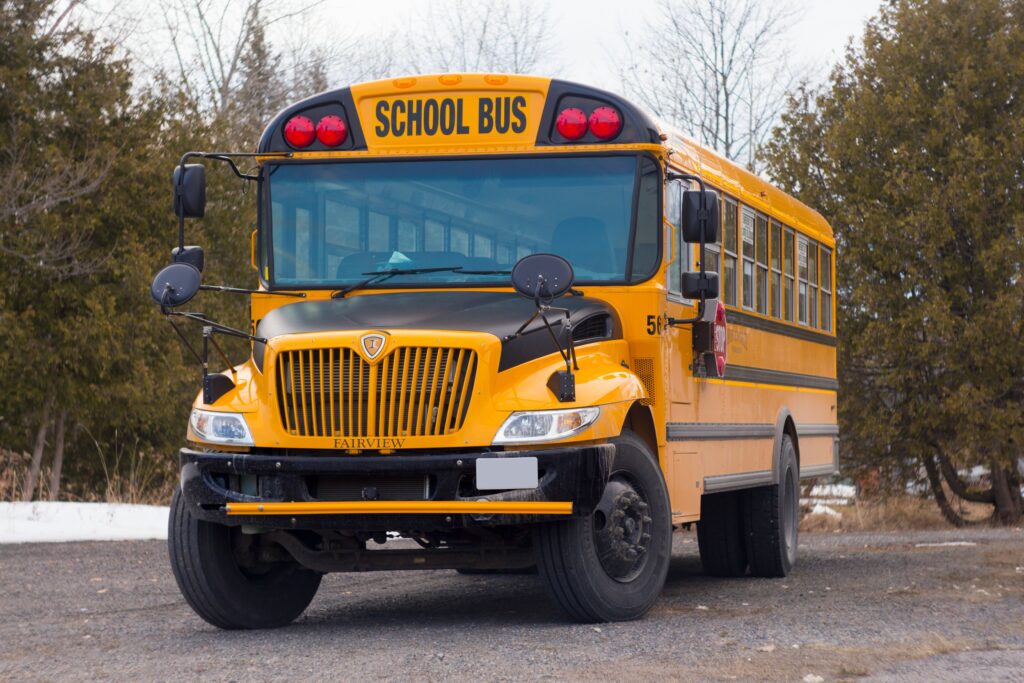
In France, school transportation isn’t organized on such an individual basis. Depending on the location, additional buses or trains may be added to existing routes to coincide with the school day schedule. Many students either walk or take public transportation, especially in major cities. Since we live in Paris, this is what my son will do. “Mom, I missed the bus” will just mean waiting for the next one… which probably won’t be too far behind!
PB&J and School Lunches
Throughout schools in the States, students can either buy food in the cafeteria or bring their own packed lunch. Unfortunately, the stereotypes about American cafeteria lunches are true. You’re bound to regularly find pizza, burgers, and fries on the menu. The peanut butter & jelly sandwich, a food combo that horrifies the average Frenchie, is a staple among the brown-bag lunch crew.
Lunch looks very different in France. Meals in the cantine are hot, balanced, and served in multiple courses—typically a plat principal, a cheese, and a starter and/or a dessert. The dessert might simply be fruit or yogurt, and water and bread are always available.
You may be surprised to learn that bringing in your own packed lunch is typically not allowed in France. In most cases, only students with allergies or other health considerations that can’t be accommodated by the cantine are allowed to do so. Of course, there’s paperwork involved, namely, a projet d’accueil individualisé (PAI) for the authorization.
French culture places a high value on sharing a meal together, which helps explain why exceptions are rare. I guess my son won’t be getting any Lunchables.
Trick or Treating
Starting as a young child, I have fond memories of trick-or-treating in my aunt and uncle’s or my grandparents’ neighborhoods, going door to door to collect candy. Some neighbors went all out, wrapping trees in cobwebs, setting up spooky light and sound effects, and lighting up freshly carved jack-o-lanterns. Even in high school, I kept the tradition going with friends. We always chose the neighborhoods known for the biggest hauls and the mythical full-size bars. A pillowcase was the standard loot bag. Nothing else would do given the volume.
Halloween has definitely become a bigger thing in recent years in France, with light decorations here and there and opportunities for kids to dress up at daycare or at school. In cities like Paris, you might see neighborhood businesses organizing trick-or-treating. Or if you’re lucky like me, you might find yourself with a fellow American in your apartment building who’ll put up signs in the elevator to let everyone know to stop by for treats! Haribo gummy candies are the most popular offering.
💡 Good to know: If you’re located in Paris, Message brings together Anglophone families and organizes events like Easter egg hunts and Halloween trick-or-treating, giving kids a chance to experience some of these traditions.
Senior Prom
Prom isn’t just a dance in the U.S. It’s a whole cultural script. The kind where awkward teenagers ask each other, “Will you go to prom with me?” weeks in advance. It’s a social milestone wrapped up in a flurry of color swatches, corsages, and crowns. It marks the end of the school year for graduating seniors, and for many, the party continues long after the dance ends.

In France, prom isn’t really a thing. First of all, social events aren’t typically organized by the school. Secondly, high school seniors are far too busy preparing to take the grueling national exam, called the bac, in June. They may organize a party amongst themselves following the completion of this weeks-long test, most likely after laying down for a long and well-deserved nap. I certainly don’t envy my son’s trade-off for this one!
School Sports Culture
Pep rallies featuring the cheerleaders, dance team, and marching band. Spirit days where everyone wears school colors. All building up to the Friday night football game, a cultural ritual in high schools in the United States. Organized by the schools themselves, team sports and school clubs cultivate camaraderie and strong group identity among students in the U.S. Many high schoolers find something of interest to participate in and they’ll usually attend meetings or sports practice right after school.
In France, most extracurricular activities, sports included, are organized outside of school. Classes may end around 5:30 or 6:00 for high schoolers, with the exception of Wednesday afternoon, when there typically aren’t any classes, and the buildings close shortly after. No roaming the hallways after school for my son! High schoolers sign up for organized clubs and sports through associations in the community.
What’s a “default” from your childhood that didn’t translate outside of the country?